 KO
KO  EN
EN  RU
RU  DE
DE  ES
ES  PT
PT  JA
JA  FR
FR  AR
AR 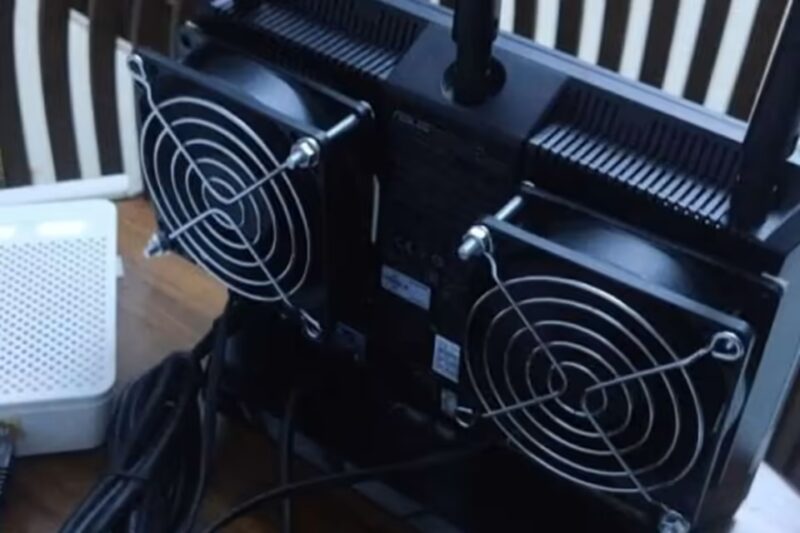
네트워킹 장비는 작아지고 있으며 — 뜨거워지고 있습니다.
더 빠르고, 밀도가 높고, 스마트한 스위치를 추구함에 따라, 열 설계는 성패를 좌우하는 요소가 되었습니다. 이것이 바로 한때는 부차적인 고려 사항이었던 소형 팬이 이제 OEM 설계실 전반에서 신뢰성과 성능 논의의 중심에 있는 이유입니다.
실제 열 문제
최신 스위치와 라우터는 좁은 금속 상자에 강력한 성능을 담고 있습니다: 멀티코어 ASIC, 고밀도 PoE, 스택형 광 포트 모두 상당한 열을 발생시킵니다. 효율적인 냉각 없이는 성능이 저하되고 장기적인 신뢰성이 급락합니다.
| 장치 유형 | 전력 소비 | 열 출력 (BTU/hr) | 일반적인 냉각 |
| Home router | 10–20 W | 30–60 | passive/tiny fan |
| 1U enterprise switch (48×10G) | 150–250 W | 500–850 | 2–4 compact fans |
| Chassis router (multi-line card) | 800–1200 W | 2500–4000 | fan trays/modules |
Even a 5°C temperature rise can double component failure rates, and that’s why airflow management is not just thermal engineering, but a reliability strategy.
소형 팬은 무엇이 그렇게 다를까요?
Unlike large system fans, compact fans used in switches and routers must operate under strict space, noise, and airflow constraints. The key is high static pressure, which allows air to move through dense heat sinks and PCB layers.
They must also endure 24/7 workloads, which is why materials, motor control, and bearing systems determine how long a network device runs without failure.
에서 Shenzhen Xinqifeng Technology, engineers design DC, AC, and EC fans specifically for compact environments, balancing airflow efficiency, low noise, and long lifespan, especially vital for 1U and 2U network gear.
네트워킹 장비에서 찾을 수 있는 주요 유형
| Fan Type | Common Use Case | Key Advantage |
| Axial Fan | General PCB airflow | High CFM per size, simple design |
| Blower / Centrifugal Fan | ASIC or PSU area cooling | Focused airflow, strong pressure |
| EC 팬 | Energy-efficient equipment | Precision control, low power draw |
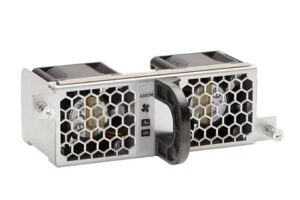
| Hot-swap Fan Module | Modular high-availability gear | Replaceable, zero downtime |
In real designs, these fan types often work together. Axial fans handle broad airflow, while blowers target hotspots. Knowing which to use helps you balance cooling efficiency, noise, and cost.
Smarter Cooling = Less Noise, More Efficiency
Adaptive control is now standard. PWM (Pulse Width Modulation) and temperature sensors let fans automatically adjust their speed to reduce both energy use and noise.
For office-edge networking devices, it means quieter operation. But for data centers, it means lower total cost of ownership and easier predictive maintenance.
A Real Engineering Example
A one of our client developing a 1U switch (around 220 W) faced overheating near the ASIC region. But by upgrading from our axial fans to a mini centrifugal fan with 30% higher static pressure, and adding a simple airflow guide, the result was impressive:
- ASIC temperature dropped by 10°C,
- noise level reduced by 5 dBA,
- Overall reliability improved notably.
That’s the power of precise airflow design and the right fan integration — often, small changes yield major stability improvements.
팬을 선택하기 전에 확인해야 할 사항
- Airflow (CFM): actual air volume moved
- Static Pressure (mmH₂O): critical for tight airflow paths
- Noise (dBA): aim below 40 dBA for office gear
- 베어링 시스템: dual ball bearings for longer life
- Voltage & Connector Type: 12V/24V, 3-pin or 4-pin (PWM/tach)
- Rated Lifetime: 50,000–70,000 hours ensures long-term uptime
Even minor spec upgrades (or a fan with slightly higher pressure) can lower hotspot temperatures by several degrees, extending the life of key components.
냉각의 미래
As network devices evolve, so do their cooling systems. It may be expected to see:
- EC mini-blowers replacing traditional fans for efficiency
- AI-driven predictive fan control
- Hybrid cooling using vapor chambers + fans
- Modular hot-swap designs for zero downtime
마무리
Compact fans may be small, but they define uptime, reliability, and user comfort. Designing them in early — not as an afterthought — ensures your networking gear performs consistently and quietly.
For teams seeking tailored solutions, Shenzhen Xinqifeng Technology provides the expertise to customize voltage, structure, and performance balance, ensuring your systems stay cool, stable, and efficient from day one.